

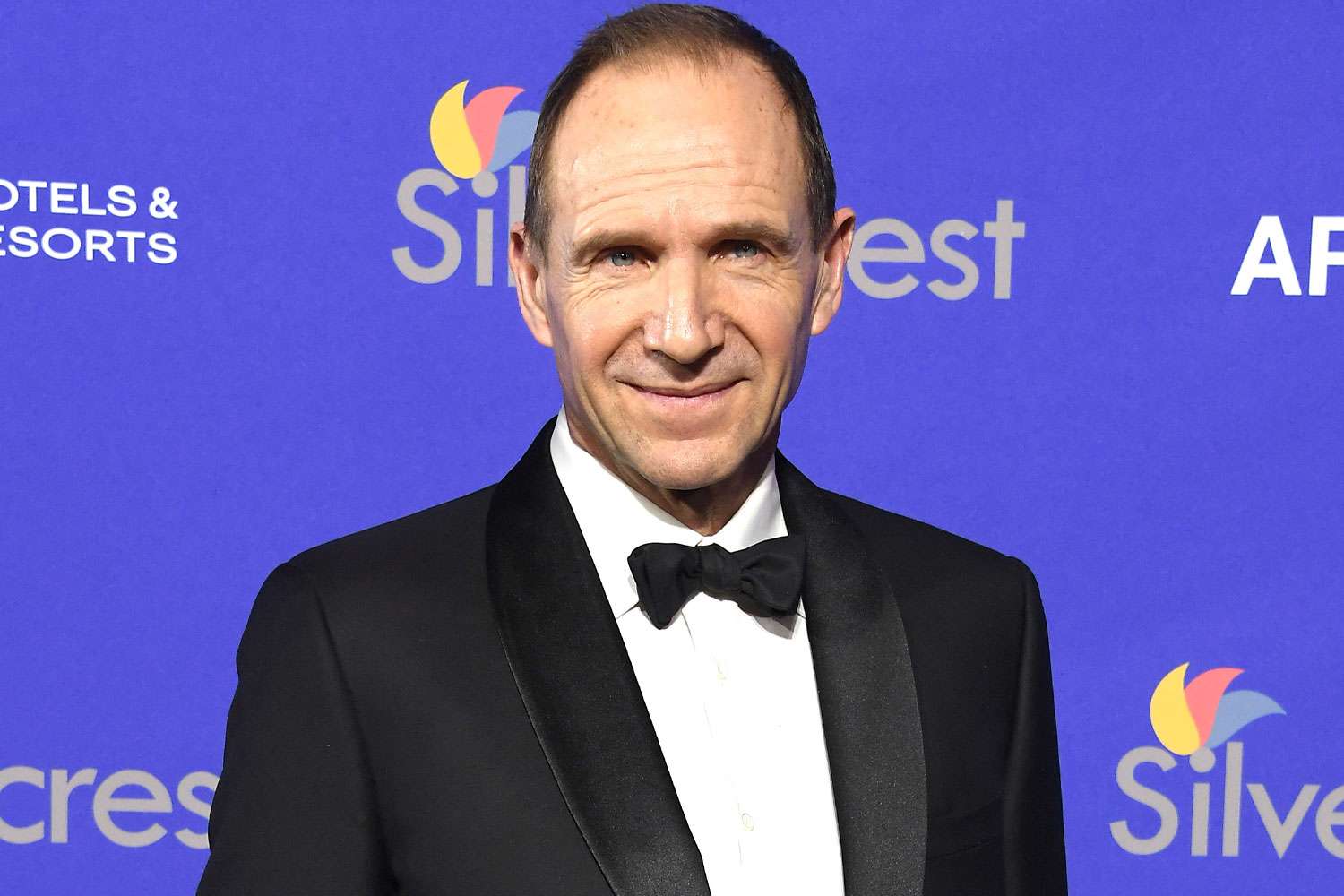
Few actors have built a career as varied and consistently impressive as Ralph Fiennes. Known for his commanding screen presence, distinctive voice, and ability to disappear into dramatically different characters, Fiennes has become one of Britain’s most respected actors. Over several decades, he has moved comfortably between serious historical dramas, Shakespearean theatre, major Hollywood franchises, independent films, and directing.
Many viewers first associate Ralph Fiennes with one unforgettable character. Some immediately think of Lord Voldemort from the Harry Potter films, while others remember his acclaimed performances in Schindler’s List or The English Patient. More recently, audiences have seen another side of his talent in films such as The Grand Budapest Hotel, The Menu, and Conclave. The variety of these roles says a great deal about his abilities as an actor.
What makes Ralph Fiennes particularly interesting is that his career has never been limited to one type of performance. He can play a frightening villain, a sophisticated romantic lead, a military or political figure, and a deeply vulnerable character without making any of them feel repetitive. His extensive work in theatre has also remained an important part of his artistic identity, while his work as a director has allowed him to explore storytelling from a different perspective.
Early Life and the Beginning of Ralph Fiennes’ Career
RalphRalph Fiennes was born in Ipswich, England, on December 22, 1962. Before becoming internationally famous, he developed a strong interest in the arts and eventually chose acting as his professional path. He trained at the Royal Academy of Dramatic Art, one of Britain’s best-known drama schools, graduating in 1985. This formal training helped establish the technical foundation that would become visible throughout his later work.
His early career was closely connected to theatre, particularly classical drama. Shakespeare became an important part of his development as a performer, and over the years he took on major roles including Hamlet, Macbeth, Richard II, Richard III, Coriolanus, and Antony. Working with demanding theatrical material gave Ralph Fiennes experience with complex language, emotional intensity, and the challenge of sustaining a character in front of a live audience.
That theatrical background remains one of the keys to understanding his acting style. Ralph Fiennes often brings a remarkable level of control to his performances. His voice, posture, timing, and facial expressions are used carefully, yet his work rarely feels mechanical. Whether he is performing Shakespeare or appearing in a modern thriller, there is usually a strong sense that every element of the character has been considered.
The Breakthrough Role in Schindler’s List

Ralph Fiennes achieved major international recognition through his performance in Steven Spielberg’s Schindler’s List. The film became one of the defining movies of the 1990s, and Fiennes’ work received widespread attention. His performance demonstrated that he could handle emotionally difficult material while creating a character with a powerful and disturbing presence.
The role changed the direction of his career. Until then, Fiennes had already developed experience on stage and appeared in film, but Schindler’s List introduced him to a much larger international audience. His performance earned major recognition, including an Academy Award nomination and a BAFTA Award for Best Actor in a Supporting Role.
More importantly, the film established a pattern that would continue throughout his career. Ralph Fiennes became known as an actor willing to take on demanding characters rather than simply choosing roles based on popularity or commercial appeal. He showed that a strong performance does not always require a character to be sympathetic. Sometimes the most memorable acting comes from making the audience understand the complexity and danger of a person they strongly dislike.
From The English Patient to International Stardom
After Schindler’s List, Ralph Fiennes continued to prove that his success was not based on a single performance. One of the most significant films of the next stage of his career was The English Patient. In the film, he delivered a very different kind of performance, showing a quieter and more emotionally vulnerable side of his acting.
The success of The English Patient strengthened his reputation as one of the leading dramatic actors of his generation. His work in the film earned him another Academy Award nomination, this time for Best Actor. The role demonstrated his ability to carry a story built around memory, loss, love, and emotional conflict rather than relying on dramatic action alone.
During this period, Ralph Fiennes also appeared in films that continued to challenge expectations. His career included historical stories, literary adaptations, thrillers, and romantic dramas. Rather than becoming trapped in one category, he kept changing direction. This willingness to take risks is one reason his filmography remains so interesting even after decades in the industry.
Ralph Fiennes and the World of Harry Potter
For an entire generation, Ralph Fiennes became instantly recognizable as Lord Voldemort in the Harry Potter film series. The character is one of the most famous villains in modern popular culture, and bringing such a well-known fictional figure to the screen required a performance that could feel both theatrical and believable.
Fiennes gave Voldemort a distinctive combination of intelligence, cruelty, confidence, and unpredictability. The performance was not simply based on loud expressions or exaggerated anger. Instead, he often used stillness and vocal control to make the character more intimidating. His unusual delivery and physical mannerisms helped create a screen villain who immediately stood apart.
The Harry Potter films introduced Fiennes to an enormous global audience and showed his ability to work successfully in a major commercial franchise. At the same time, the role did not replace the rest of his career. He continued appearing in very different films and returning to theatre, proving that mainstream success and serious artistic work could exist side by side.
His Range Beyond Villains and Serious Drama
One of the biggest misconceptions about Ralph Fiennes is that he only plays intense or dark characters. While those roles have certainly been important, his career contains plenty of evidence of his comic talent. His performance as Monsieur Gustave in Wes Anderson’s The Grand Budapest Hotel is an excellent example.
In that role, Fiennes showed extraordinary comic timing. The character is elegant, dramatic, quick-witted, and frequently caught in ridiculous situations. Fiennes understood the precise rhythm required for Wes Anderson’s highly stylized filmmaking and delivered a performance that was energetic without becoming chaotic. It remains one of the clearest demonstrations of his ability to reinvent himself.
His later work has continued to show this range. In The Menu, he played the mysterious and intensely controlled Chef Julian Slowik, while in Conclave he took on the more restrained role of Cardinal Lawrence. These characters are completely different in tone, yet Fiennes makes both believable by finding the specific emotional world of each role. His more recent filmography also includes The Return, 28 Years Later, and 28 Years Later: The Bone Temple.
A Strong Presence in James Bond
Another major chapter in Ralph Fiennes’ career came through the James Bond franchise. He joined the series as Gareth Mallory, eventually becoming M, the head of MI6. Taking on a famous role in such an established franchise was a significant challenge because audiences already had strong expectations about the character.
Fiennes approached the role with authority and intelligence. His version of M felt different from previous interpretations while still fitting naturally into the world of James Bond. He appeared in Skyfall, Spectre, and No Time to Die, becoming an important part of the Daniel Craig era of the franchise.
The role also showed another important strength in his career: the ability to support an ensemble without demanding that every project revolve around him. Fiennes can be the central figure in a serious drama, but he can also enter a major franchise and make a lasting impression as part of a larger cast. That flexibility has helped him remain relevant across different kinds of filmmaking.
Ralph Fiennes as a Theatre Actor
Despite his enormous success in cinema, Ralph Fiennes has never completely separated himself from theatre. His stage career includes an impressive collection of classical and modern productions, and Shakespeare has remained particularly important to his artistic life.
He has played Hamlet, Macbeth, Coriolanus, Richard II, Richard III, and other major characters from the Shakespearean canon. These are not easy roles. They demand technical skill, physical endurance, emotional range, and a deep understanding of complex language. Fiennes’ continuing relationship with theatre suggests that he sees acting as more than simply appearing in front of a camera.
His stage experience also helps explain the confidence he brings to film. Theatre teaches actors to communicate clearly and sustain emotional energy over long performances. Fiennes carries those skills into cinema, although he adjusts them to suit the smaller and more detailed world of the camera. The result is an actor capable of performing on both a large stage and an intimate close-up.
Moving Behind the Camera as a Director
Ralph Fiennes has also explored filmmaking as a director. His feature directing work includes Coriolanus, The Invisible Woman, and The White Crow. Directing allowed him to move beyond the responsibilities of a single character and think about the complete structure of a story.
Coriolanus was especially connected to his theatrical background because it brought Shakespeare’s work into a modern cinematic setting. Fiennes directed the film while also playing the title role, a demanding combination that required him to manage both performance and the larger creative process.
His directing career has continued beyond feature films. In 2025, he made his Paris Opera directing debut with Eugene Onegin, bringing his long-standing interest in Pushkin’s work and dramatic performance into another artistic form. This step showed that, even after decades of success, Fiennes continues to look for new creative challenges rather than simply repeating what has worked before.
Why Ralph Fiennes Remains Such a Respected Actor
The lasting respect Ralph Fiennes has earned comes largely from consistency. Many actors have memorable roles, but maintaining high-quality work across theatre, independent cinema, major franchises, historical dramas, comedies, and directing is much more difficult. Fiennes has managed to build a career that is both artistically ambitious and widely accessible.
Another reason for his reputation is his versatility. A viewer watching Schindler’s List, The Grand Budapest Hotel, Harry Potter, The Menu, and Conclave could easily be surprised that the same actor appears in all of them. Fiennes changes not only his appearance but also his rhythm, voice, energy, and emotional approach according to the character.
The British Film Institute recognized his contribution by naming him a BFI Fellow in 2011, placing him among notable figures honored for their contributions to film and television culture. His continuing work on stage and screen demonstrates that his career is still evolving rather than simply relying on past achievements.
Final Thoughts
Ralph Fiennes is far more than an actor known for playing famous villains. His career represents a rare combination of technical skill, versatility, discipline, and creative curiosity. From Shakespearean theatre to Schindler’s List, from The English Patient to Harry Potter, and from James Bond to The Grand Budapest Hotel, he has repeatedly shown that he can adapt to almost any kind of story.
His work as a director adds another dimension to his career and reveals his interest in the complete process of storytelling. Even after establishing himself as one of Britain’s most accomplished actors, he has continued to explore new artistic territory rather than remaining inside a comfortable formula.
Ultimately, the strength of Ralph Fiennes’ career lies in his refusal to become predictable. He can be elegant, frightening, funny, tragic, authoritative, or vulnerable, often changing dramatically from one project to the next. That ability to surprise audiences while maintaining a consistently high standard is what has made Ralph Fiennes one of the most distinctive and respected performers of his generation.

