

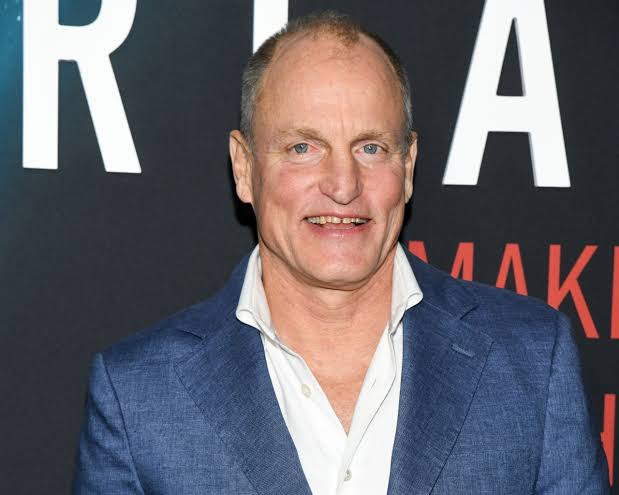
Woody Harrelson is one of those actors whose career is difficult to place into a single category. He can be funny, dramatic, unpredictable, serious, or quietly emotional, often within completely different types of projects. Over several decades, he has built a reputation for choosing a wide variety of roles rather than staying with one particular character type.
Born Woody Harrelson on July 23, 1961, in Midland, Texas, Harrelson eventually became a familiar face on television and in major Hollywood productions. His breakthrough came with the long-running sitcom Cheers, where he played bartender Woody Boyd. That role earned him an Emmy Award and helped establish him as a recognizable television performer.
From there, Woody Harrelson successfully moved into film, taking on roles in movies such as White Men Can’t Jump, Natural Born Killers, The People vs. Larry Flynt, No Country for Old Men, Zombieland, and The Hunger Games. His career demonstrates how an actor can move between comedy, crime, drama, action, science fiction, and television without being limited to one style.
Early Life and Education
Woody Harrelson was born in Texas but grew up in Lebanon, Ohio. His early life was shaped largely by his mother, Diane, who raised Woody Harrelson and his brothers. According to biographical accounts, Harrelson developed an interest in acting and eventually attended Hanover College in Indiana. He graduated in 1983 with a degree connected to English and theater arts.
College gave Woody Harrelsonan opportunity to develop his interest in performance, but becoming a professional actor was still a challenging goal. Like many performers, he began with smaller opportunities and theater work before finding a major opening in television.
After college, Woody Harrelson moved toward professional acting and spent time working in New York theater. Those early experiences were important because they gave him practical exposure to performance before he became widely recognized by television and movie audiences.
His early career is a useful reminder that successful acting careers rarely happen overnight. Harrelson spent years developing his craft before receiving the role that would change his professional life.
Woody Harrelson’s Breakthrough on Cheers
The biggest early turning point in Harrelson’s career came in 1985, when he joined the cast of the NBC sitcom Cheers as Woody Boyd. The character was a friendly bartender who quickly became an important part of the show’s ensemble.
Woody Harrelson performance connected strongly with audiences, and he remained on Cheers through the show’s final years. The Television Academy records that he received five Emmy nominations for his performance as Woody Boyd and won the Primetime Emmy Award for Outstanding Supporting Actor in a Comedy Series in 1989.
The importance of Cheers to Woody Harrelson career cannot be overstated. It gave him national recognition and proved that he could hold his own in a popular television ensemble. More importantly, it gave him the professional platform to pursue more ambitious film roles.
Rather than allowing himself to be permanently associated with a sitcom character, Harrelson gradually expanded his work into movies and more serious dramatic performances. That transition became one of the defining features of his career.
Moving From Television to Movies

While working on Cheers, Woody Harrelson also began appearing in films. His movie career became increasingly visible during the early 1990s, particularly with White Men Can’t Jump and Indecent Proposal. These projects demonstrated that he could work successfully outside the sitcom environment.
White Men Can’t Jump, released in 1992, paired Woody Harrelson with Wesley Snipes in a basketball-focused comedy. The movie allowed him to show a different side of his acting personality and helped establish him as a film performer.
The following year, he appeared alongside Robert Redford and Demi Moore in Indecent Proposal. The film attracted significant attention and further increased Harrelson’s visibility in Hollywood. These projects were important stepping stones as he moved beyond the character of Woody Boyd.
The People vs. Larry Flynt and a More Serious Side
One of the most significant performances of Woody Harrelson career came in The People vs. Larry Flynt, directed by Miloš Forman. Harrelson portrayed Larry Flynt, a controversial publisher whose life and legal battles formed the basis of the film.
The role was a major departure from the lighter character he had played on Cheers. Instead of relying mainly on comedy, Harrelson had to portray a complicated real-life figure in a dramatic story involving personal conflict, public controversy, and questions about freedom of expression.
His performance received major awards recognition. Woody Harrelson earned an Academy Award nomination for Best Actor for the role, establishing that his career had moved well beyond television comedy.
The film also showed one of Woody Harrelson most valuable professional qualities: his willingness to take risks. Throughout his career, he has frequently chosen characters that are very different from one another, which has helped prevent his filmography from becoming predictable.
Notable Film Roles in the 1990s and 2000s
After The People vs. Larry Flynt, Woody Harrelson continued exploring different genres. He appeared in films including Wag the Dog, The Thin Red Line, and No Country for Old Men. His work during this period showed increasing range and allowed him to collaborate with highly regarded directors and performers.
In No Country for Old Men, Harrelson had a supporting role in the Coen brothers’ acclaimed crime drama. The film went on to win the Academy Award for Best Picture, and its ensemble cast received significant recognition.
Another important project was The Messenger, released in 2009. Harrelson played Captain Tony Stone, a military officer working with a difficult and emotionally demanding assignment. His performance earned him another Academy Award nomination, this time for Best Supporting Actor.
These roles helped reinforce Harrelson’s reputation as an actor capable of handling serious material. At the same time, he continued accepting lighter projects, demonstrating that he had no intention of limiting himself to one genre.
Zombieland and Woody Harrelson Comedic Energy
Harrelson’s career has always included comedy, and Zombieland became one of the clearest examples of how effectively he could combine humor with action.
Released in 2009, Zombieland featured Harrelson as Tallahassee, an energetic and highly confident character living in a zombie-filled world. The performance allowed him to return to the comedic territory that had helped establish his career while also incorporating action and exaggerated personality.
The movie became popular with audiences and eventually received a sequel, Zombieland: Double Tap, in 2019. Harrelson returned as Tallahassee, showing that the character had remained memorable more than a decade after the original film.
His work in the franchise also highlighted something that has been consistent throughout his career: Harrelson can make larger-than-life characters entertaining without making every performance feel identical.
Haymitch Abernathy in The Hunger Games
For a younger generation of movie audiences, Woody Harrelson became especially recognizable through The Hunger Games film series. He played Haymitch Abernathy, a former champion who becomes a mentor to the central characters.
Harrelson appeared as Haymitch in The Hunger Games and returned for its subsequent films, including Catching Fire, Mockingjay – Part 1, and Mockingjay – Part 2.
Haymitch is an interesting character because he combines humor, frustration, intelligence, and responsibility. Harrelson’s performance gave the character a distinctive personality while still allowing the more serious aspects of the story to come through.
The role introduced Harrelson to a massive international audience. It also demonstrated his ability to work within a large franchise while maintaining the individuality that had characterized many of his earlier performances.
True Detective and a Return to Television
Harrelson returned to prominent television drama with HBO’s True Detective. In the first season, he played Detective Marty Hart opposite Matthew McConaughey.
The series was structured as a dark crime drama, requiring a very different style from Cheers. Harrelson’s performance explored a complicated detective whose personal life and professional responsibilities often collide.
The Television Academy lists Harrelson among the nominees for Outstanding Lead Actor in a Drama Series for his work on True Detective in 2014. He was also an executive producer on the series.
His work on the show reinforced the idea that Harrelson could move comfortably between film and television. Instead of treating television as a secondary medium, he approached the project with the same seriousness associated with his major film roles.
Three Billboards and Later Career Highlights
In 2017, Harrelson appeared in Three Billboards Outside Ebbing, Missouri, a darkly comic drama featuring a group of emotionally complicated characters. He played Sheriff Bill Willoughby, a character caught between personal circumstances and a difficult community conflict.
The performance earned Harrelson another Academy Award nomination, this time for Best Supporting Actor.
That same period also included his appearance as the Colonel in War for the Planet of the Apes. A year later, he joined the Star Wars universe in Solo: A Star Wars Story, playing Tobias Beckett.
These projects illustrate the diversity of Harrelson’s later career. He has moved comfortably between independent dramas, major franchises, science-fiction productions, and mainstream entertainment.
Woody Harrelson’s Acting Style and Career Legacy
One of the most noticeable characteristics of Woody Harrelson’s career is variety. He has played friendly television characters, controversial real-life figures, detectives, mentors, villains, military characters, comedians, and dramatic supporting roles.
Rather than developing a single recognizable screen persona and repeating it in every project, Harrelson has frequently changed his approach depending on the material. That flexibility has allowed him to remain relevant across several generations of audiences.
His awards history reflects the breadth of his work. In addition to his Emmy win for Cheers, he has received multiple Academy Award nominations for performances in The People vs. Larry Flynt, The Messenger, and Three Billboards Outside Ebbing, Missouri.
Final Thoughts on Woody Harrelson
Woody Harrelson’s career is a strong example of long-term versatility in Hollywood. He began with theater and television, became widely known through Cheers, and then successfully transitioned into a broad range of film and television projects.
From White Men Can’t Jump and Natural Born Killers to No Country for Old Men, Zombieland, The Hunger Games, True Detective, and Three Billboards Outside Ebbing, Missouri, his career covers an unusually wide range of genres and character types.
What makes his journey particularly interesting is the way he has continued to reinvent himself. Instead of remaining tied to the role that first made him famous, Harrelson consistently explored new characters and new forms of storytelling. That willingness to experiment has made him one of the more recognizable and versatile American actors of his generation.

