

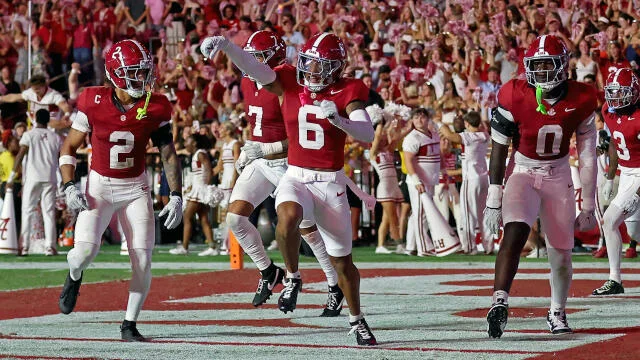
Alabama football is more than a college sports program. For generations of fans, the Crimson Tide has represented tradition, competition, pride, and a standard of excellence that has made the University of Alabama one of the most recognizable names in American college football. From legendary coaches and championship teams to packed Saturdays in Tuscaloosa, Alabama football has developed an identity that reaches far beyond the field.
The Crimson Tide began playing football in 1892, giving the program well over a century of history. Alabama Athletics lists 18 national championships and 30 SEC championships among the program’s recognized accomplishments. Those numbers help explain why conversations about college football history so often include Alabama.
What makes Alabama football especially interesting is the way its past continues to influence its present. The program has experienced different coaching eras, changing offensive systems, new conference challenges, and evolving college football rules, yet the expectations surrounding the Crimson Tide remain remarkably high.
The Long History of Alabama Football
The story of Alabama football began in 1892, making the Crimson Tide one of the oldest major college football programs in the country. Over the decades, the team gradually developed from a regional program into a national powerhouse. Early success helped establish Alabama’s reputation, while later generations of coaches and players expanded that reputation dramatically.
One of the important early milestones came in 1925, when Alabama went undefeated at 10-0 and became the first Southern team to play in the Rose Bowl. The Crimson Tide defeated Washington 20-19 in that game, an achievement that helped put Southern college football on a much larger national stage. Alabama Athletics identifies the 1925 team among the program’s recognized national championship teams.
Success did not remain limited to one era. Alabama continued to produce competitive teams throughout the twentieth century, eventually developing a football culture in which winning became an expectation rather than an occasional achievement. That long history is one reason the words “Alabama football” carry so much weight whenever the college football season begins.
The Bear Bryant Era
When discussing Alabama Football, it is almost impossible to avoid the name Paul “Bear” Bryant. Bryant returned to Alabama as head coach in 1958 and eventually became one of the defining figures in college football history. His 25-year tenure in Tuscaloosa produced six national championships and numerous conference titles.
Bryant’s Alabama teams became known for physical football, disciplined preparation, and a demanding approach to competition. His influence went beyond individual seasons because he helped create a culture that remained part of Alabama’s identity long after his retirement. The success of his teams also established a benchmark that future Alabama coaches would inevitably be measured against.
The stadium itself reflects Bryant’s importance to the program. Originally known as Bryant-Denny Stadium, the facility has been Alabama’s home since 1929. The venue now carries the name Saban Field at Bryant-Denny Stadium, honoring another legendary Alabama coach while retaining Bryant’s name.
Nick Saban and a Modern Dynasty
The modern history of Alabama football is strongly connected with Nick Saban, who became head coach in 2007. During his Alabama career from 2007 through 2023, Saban’s teams compiled a 206-29 record and won six national championships in Tuscaloosa.
Saban’s teams were known for detailed preparation, strong defensive play, outstanding recruiting, and an ability to develop players for the next level. Alabama became a regular participant in the biggest games of the college football season, and its annual schedule frequently included matchups against some of the strongest programs in the country.
The 2020 season was another memorable chapter. Alabama finished 13-0 and defeated Ohio State 52-24 in the College Football Playoff National Championship Game. Alabama Athletics recognizes that victory as the program’s 18th national championship. The season demonstrated the combination of offensive production, defensive strength, and depth that had become associated with Saban-era Alabama.
Life at Bryant-Denny Stadium
For many fans, Alabama football begins with the experience of entering Bryant-Denny Stadium on a Saturday afternoon. Located in Tuscaloosa, the stadium has been Alabama’s home since its opening in 1929 and currently has an official capacity of 100,077.
The size of the stadium is impressive, but the atmosphere is what makes a home game particularly memorable. Thousands of fans arrive wearing crimson and white, and game day transforms Tuscaloosa into a football-centered community. Tailgates, traditions, marching bands, and pregame activities all contribute to the experience before the players even take the field.
The venue has also witnessed some remarkable home-field numbers. Alabama Athletics lists the stadium’s record entering the 2026 season at 310-56-3, excluding 15 victories vacated by an NCAA ruling. That record illustrates how important home games have been to the Crimson Tide throughout its history.
Alabama Football and the SEC
The Southeastern Conference has long been one of the most competitive environments in college football, and Alabama has played a major role in the league’s history. The Crimson Tide won its first SEC championship in 1933, when Frank Thomas was head coach.
The program’s conference success continued through several coaching generations. Bear Bryant won numerous SEC championships, while Nick Saban later established another dominant stretch. Alabama’s success in the SEC helped create some of the most important rivalries and annual matchups in college football.
The modern SEC is also significantly different from the conference Alabama entered decades ago. Conference expansion has brought new opponents and changed the structure of league competition. As college football continues to evolve, Alabama faces a broader group of high-level opponents while maintaining the same demanding expectations associated with the Crimson Tide.
The Alabama-Auburn Rivalry
One of the most recognizable rivalries in college football is the annual meeting between Alabama and Auburn. The game is commonly known as the Iron Bowl, and it has become one of the defining sporting events in the state of Alabama.
The rivalry is about more than football records. Families, communities, alumni, students, and fans often have strong connections to one side or the other. That makes the annual matchup emotionally significant even when one team enters the game with a different record or national ranking.
The Iron Bowl has also produced some unforgettable moments throughout its history. Because the teams know each other so well, individual plays can become part of Alabama football folklore. Every season brings another chapter, which is one reason the rivalry continues to attract enormous attention.
Famous Alabama Football Players
Alabama has produced an extraordinary number of talented football players over the decades. Some became college stars, while others went on to successful professional careers. The program’s ability to attract and develop elite talent has been one of its most important strengths.
During the Saban era, players such as Mark Ingram II, Derrick Henry, Julio Jones, Amari Cooper, DeVonta Smith, Tua Tagovailoa, and Bryce Young became major names in college football. Several of them won major individual awards, while others became prominent NFL players.
The history extends much further back than the modern era, of course. Alabama’s tradition includes generations of All-Americans and award winners. According to Alabama’s football historical information, the program has produced 147 first-team All-Americans, with those honors accounting for 187 selections. This level of individual recognition reflects the depth of talent that has passed through Tuscaloosa.
Why Recruiting Matters So Much
Recruiting is one of the foundations of Alabama football. A successful college program needs talented players, but it also needs a system capable of developing those players after they arrive on campus. Alabama has built much of its reputation around both parts of that process.
Elite recruits are attracted to programs where they believe they can compete for championships, receive quality coaching, play in major games, and prepare for professional football. Alabama’s history provides plenty of evidence for recruits looking for that type of environment.
Recruiting has also changed significantly with the introduction of the transfer portal, name, image, and likeness opportunities, and other changes to the college football landscape. Modern programs must now manage talent differently than they did in previous decades. For Alabama, maintaining a strong roster requires adapting to those changes while preserving the development culture that helped establish the program’s reputation.
The Meaning of “Roll Tide”
Few college sports expressions are as recognizable as “Roll Tide.” The phrase has become closely associated with the University of Alabama and its athletic culture.
For Alabama football supporters, “Roll Tide” can be used before games, after victories, in social conversations, and as a general expression of school pride. It has become part of the identity surrounding the Crimson Tide.
The phrase also demonstrates how Alabama football has grown beyond the boundaries of a university team. Fans around the country recognize the words even if they have never attended a game in Tuscaloosa. That level of recognition is difficult to achieve and is one of the reasons Alabama remains such a major name in college athletics.
What Makes Alabama Football So Popular?
Alabama football combines several ingredients that are difficult to replicate. There is the history, including national championships and legendary coaches. There is the fan culture, which turns Saturdays into major events. There are the rivalries, particularly the Iron Bowl. And there is the steady flow of talented players who keep the program relevant.
Another major factor is consistency. Alabama has experienced different eras, but the program has repeatedly rebuilt itself following changes in coaching staff, players, conference structures, and playing styles. That ability to adapt has been central to its long-term success.
The expectations are also part of the story. At Alabama, a season can receive intense attention even when the team is already successful by ordinary college football standards. That pressure comes directly from the program’s history, and it creates a unique environment for coaches and players.
The Future of Alabama Football
The future of Alabama football will be shaped by the rapidly changing college football environment. Conference expansion, the transfer portal, NIL opportunities, playoff changes, and evolving roster rules have all altered how major programs operate.
Alabama’s historical foundation gives the program a strong identity, but tradition alone cannot guarantee future success. Coaches must continue developing players, recruiting effectively, adjusting schemes, and responding to changes throughout college football.
That balance between tradition and adaptation may be one of the most interesting parts of Alabama football in the years ahead. The Crimson Tide has already passed through numerous eras, from the early teams of the twentieth century to Bear Bryant’s championship years and Nick Saban’s modern run. Each generation has added something new to the story.
Final Thoughts on Alabama Football
Alabama football is ultimately a story about history, people, competition, and tradition. From its first season in 1892 to championship teams of the modern era, the Crimson Tide has built one of the most recognizable programs in college football.
The numbers tell part of that story. Alabama lists 18 national championships, 30 SEC championships, 71 bowl appearances or postseason games, and 42 bowl victories in its football history. But statistics alone cannot fully explain why the program matters so much to its supporters.
For fans, Alabama football is experienced through packed stadiums, family traditions, rivalries, legendary players, unforgettable games, and the familiar call of “Roll Tide.” As college football continues to change, the Crimson Tide will continue adding new chapters to a history that already spans more than a century.

