

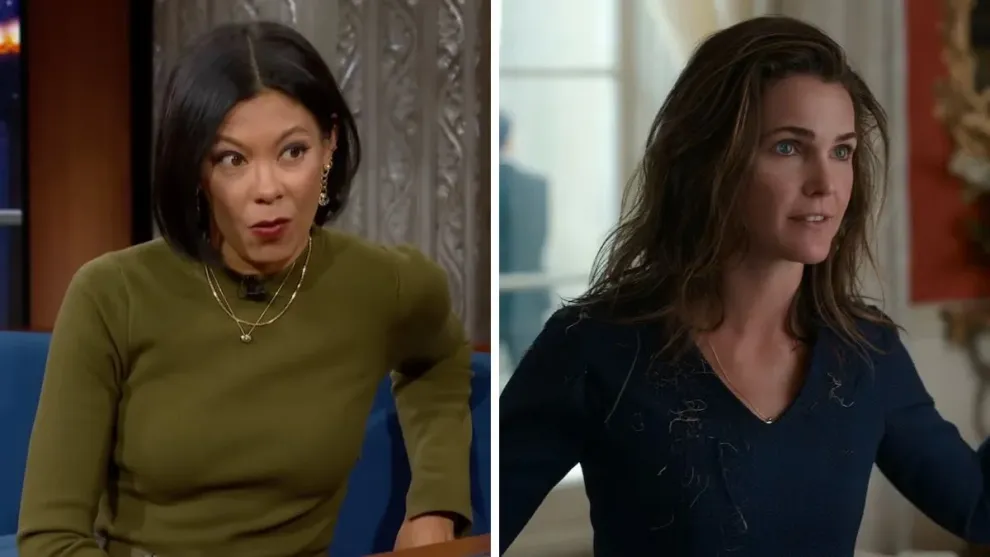
Alex Wagner has built an impressive career by moving comfortably between political journalism, television, cultural reporting, and long-form storytelling. Known for her thoughtful interviews and conversational approach to complicated political subjects, Wagner has become a recognizable name in American media. Her career is especially interesting because it did not follow a single straight path. Instead, she worked across magazines, political organizations, television networks, and documentary programming before establishing herself as a prominent television journalist.
What makes Alex Wagner stand out is the range of experiences behind her on-screen presence. She has covered politics, written about culture and identity, worked in humanitarian advocacy, and interviewed influential figures. That combination has helped shape a style that is analytical without always feeling overly formal.
For people searching for information about Alex Wagner, there is much more to her story than her time in front of a television camera. Her background, education, early journalism work, books, television programs, and evolving career all help explain how she became one of the more distinctive personalities in modern American political media.
Who Is Alex Wagner?
Alex Wagner, whose full name is Alexandra Swe Wagner, is an American journalist and television host. She was born on November 27, 1977, in Washington, D.C., and attended Brown University. Her professional career has included positions in journalism, political reporting, cultural media, humanitarian advocacy, and television.
Wagner became widely known to television audiences through MSNBC, where she first hosted Now with Alex Wagner. The program ran from 2011 to 2015 and gave her an early opportunity to develop her own voice as a political commentator and interviewer. She later returned to MSNBC in a more prominent role, eventually hosting Alex Wagner Tonight in prime time.
Her career has also included important work away from traditional political television. She was an editor at The Fader, worked as a White House correspondent for Politics Daily, contributed to The Huffington Post, and became a contributing editor at The Atlantic. She also worked with Not On Our Watch, a humanitarian organization focused on mass atrocities and human-rights issues.
That variety is an important part of understanding Wagner. She is not simply a cable-news personality who moved into journalism through television. Her professional background stretches across several different areas of media and public affairs.
Alex Wagner’s Early Career in Journalism
Alex Wagner Before becoming a familiar face on national television, Wagner spent years developing her skills as a writer and editor. One of her notable early positions was at The Fader, where she became editor in chief. During that period, she covered music, culture, and social movements, giving her experience in storytelling that went beyond traditional political reporting.
This early experience matters because it helped Wagner develop an understanding of how culture and politics often overlap. Political stories are rarely isolated from society, entertainment, economics, or popular culture. Her background gave her a broader perspective that later became useful when she moved into television news.
Wagner also worked as a cultural correspondent for the Center for American Progress before moving into more direct political journalism. She subsequently became a White House correspondent for Politics Daily, where she covered national and international developments. Her reporting career eventually led her to The Huffington Post, where she wrote about the intersection of business, politics, innovation, and technology.
These experiences gave her something that many television personalities spend years trying to develop: a foundation in actual reporting. Instead of entering television as a commentator first, Wagner spent considerable time learning how stories are researched, reported, edited, and presented.
Her Transition to MSNBC and Television
Alex Wagner’s relationship with MSNBC became one of the defining parts of her professional career. She appeared as an analyst and guest on the network before becoming the host of Now with Alex Wagner in 2011. The show gave her a platform to discuss politics, current affairs, and broader social issues with guests from different fields.
Hosting a daily political program is demanding. It requires constant preparation, an ability to react quickly to breaking news, and enough subject knowledge to conduct meaningful interviews. Wagner’s reporting background helped her transition into that environment.
Although Now with Alex Wagner eventually ended in 2015, it was not the end of her television career. Instead, Wagner continued expanding her work across different media platforms. She became involved with other television projects, wrote for major publications, and continued building her reputation as a journalist capable of handling complex political subjects.
Her television career also included work on The Circus, Showtime’s political documentary series. The program provided another opportunity for Wagner to approach politics through longer-form reporting rather than relying exclusively on the traditional nightly-news format.
Alex Wagner and Her Return to Prime-Time News
One of the biggest moments in Wagner’s television career came in 2022, when MSNBC announced that she would take over the network’s 9 p.m. Eastern time slot from Tuesday through Friday. The position attracted significant attention because it followed Rachel Maddow’s decision to reduce her regular weeknight schedule. Wagner’s program, Alex Wagner Tonight, debuted on August 16, 2022.
Taking over a high-profile television slot is never simple, particularly when the previous host has developed a large and loyal audience. Wagner faced the natural challenge of establishing her own identity rather than attempting to reproduce Maddow’s approach.
That distinction became important to Wagner’s work. Rather than simply trying to become a replacement for another television personality, she developed a style built around interviews, political analysis, current events, and stories that connected politics with everyday life. Coverage of her early tenure noted that she brought a different perspective and professional background to the position.
Her time in prime time demonstrated how much the television-news environment had changed. Audiences increasingly expect journalists to provide not just information but also context. Wagner’s reporting-oriented background allowed her to explain why a political development mattered instead of simply announcing that it had happened.
Alex Wagner’s Approach to Journalism
One of the most interesting aspects of Alex Wagner’s career is her ability to combine analysis with storytelling. Her work does not fit neatly into the category of traditional hard-news reporting or pure opinion television. Instead, she often approaches political subjects through conversations, interviews, historical context, and human stories.
Her background in cultural journalism is particularly relevant here. A political story can involve laws and elections, but it can also involve identity, family, economics, technology, race, culture, and changing social expectations. Wagner’s career across different forms of media has allowed her to move between these subjects naturally.
Another characteristic of her work is preparation. High-level television interviews require much more than simply reading questions from a script. Journalists need to understand the subject well enough to recognize contradictions, ask follow-up questions, and explain complicated issues to viewers. Wagner’s career in print journalism and reporting gave her experience that translated well into this format.
Her approach has also allowed her to cover stories that sit outside the narrow boundaries of Washington politics. In interviews and television discussions, she has shown interest in culture, climate, technology, and other issues that influence the political conversation without always being considered traditional political stories.
Alex Wagner as an Author
Wagner’s storytelling skills are also visible in her writing. In 2018, she published Futureface: A Family Mystery, an Epic Quest, and the Secret to Belonging. The book explores family history, identity, ancestry, and questions about what it means to belong in modern America.
The book is significant because it demonstrates a different side of Wagner’s journalism. Instead of focusing entirely on the daily political news cycle, she explored a deeply personal and historical subject. The project allowed her to examine identity through the experiences of her own family while connecting those experiences to larger questions about American society.
That theme fits naturally with Wagner’s broader career. Much of her professional work has involved examining the relationship between individuals and larger social forces. Her journalism often asks how political and cultural changes affect real people, while Futureface approaches similar questions through family history and personal investigation.
Her work as an author also reinforces the idea that Wagner is interested in storytelling beyond the immediate news cycle. Television can explain what is happening today, while books can provide the space to explore why certain questions continue to matter over generations.
Alex Wagner’s Work Outside Traditional News
Another important chapter in Wagner’s career was her work with Not On Our Watch, an organization founded by prominent actors and advocates to address mass atrocities and humanitarian crises. Wagner served as executive director and became involved in international issues, including work connected with countries experiencing severe human-rights problems.
This experience added another dimension to her professional background. Humanitarian advocacy requires understanding international politics, government policy, conflict, and the consequences those issues have for ordinary people. It also exposed Wagner to challenges that cannot always be explained through a simple political debate.
Her experience outside journalism helps explain why her reporting sometimes focuses on the human consequences of political decisions. A policy story may begin in Washington, but its effects can be felt thousands of miles away by people who have little influence over the decisions being made.
This combination of journalism and advocacy also illustrates the broad range of Wagner’s interests. Her career has never been limited to one narrow professional category. She has moved between reporting, editing, television, writing, documentary storytelling, and public-interest work.
Alex Wagner’s Personal Life and Family
Alex Wagner is married to Sam Kass, a former White House chef and food policy adviser. The couple married in 2014 and have two children. Wagner has generally kept much of her family life separate from the intense public attention surrounding her professional career.
Her family background has also influenced some of her writing. Wagner’s mother is Burmese, while her father is American, and questions surrounding identity and belonging became central themes in Futureface.
That background provides useful context for understanding why identity has been such a recurring subject in her work. Her interest is not simply academic. Questions about heritage, culture, family, and belonging can become especially complicated for people whose personal histories cross national or cultural boundaries.
At the same time, Wagner’s public career has largely remained focused on journalism rather than celebrity culture. While her personal background has attracted interest, her professional accomplishments continue to be the main reason audiences follow her work.
What Makes Alex Wagner Different?
Alex Wagner’s career is unusual because it combines several types of journalism. She has worked in music and cultural media, political reporting, television news, documentary programming, magazine writing, and book publishing. Each experience has contributed something different to her professional style.
Her strength is arguably the ability to connect different subjects. Politics does not exist in isolation, and Wagner’s career reflects that reality. Her work often connects government decisions with culture, identity, economics, technology, and the personal experiences of individuals.
Another important factor is her willingness to develop her own identity as a journalist. Following a major television personality can create enormous pressure, particularly when the audience already has expectations about what a particular time slot should look like. Wagner’s challenge was not simply presenting the news; it was establishing a recognizable voice of her own.
That process has made her career worth following. Rather than being defined by one program or one network position, Wagner has repeatedly moved into new formats and taken on different kinds of storytelling.
Alex Wagner’s Career After Prime-Time MSNBC
MSNBC underwent a major programming reshuffle in 2025, and Wagner’s prime-time program was among the changes. She moved from hosting her regular prime-time show into a contributor role as the network reworked its lineup.
A change in television programming does not necessarily mean the end of a journalist’s career. In Wagner’s case, her experience extends well beyond a single show. Her work in magazines, books, podcasts, documentary television, and political analysis gives her multiple avenues for continuing to engage audiences.
Macmillan currently describes Wagner as a senior political analyst at MS NOW and also highlights her work as the host of the Runaway Country podcast and a contributor to Pod Save America. The publisher also identifies her as the author of Futureface.
This broader range of work reflects how modern journalism is evolving. A journalist no longer needs to rely on one television program to maintain a public presence. Podcasts, newsletters, books, streaming projects, and digital publications can all provide opportunities to reach audiences.
Final Thoughts on Alex Wagner
Alex Wagner’s career is a good example of how modern journalism can develop across multiple platforms. From editing a music magazine to covering the White House, from humanitarian advocacy to national television, her professional journey has included experiences that few journalists can combine in quite the same way.
Her appeal comes partly from that variety. Wagner brings the instincts of a reporter, the curiosity of a writer, and the communication skills required of a television host. Her career demonstrates that effective journalism is not simply about knowing the day’s headlines. It is also about understanding history, culture, people, and the larger forces behind the news.
For anyone interested in Alex Wagner, her career is best understood as an ongoing evolution rather than a single television chapter. Her work has repeatedly crossed the boundaries between politics, culture, identity, and storytelling.
As media continues to change, Wagner’s experience across television, print, books, podcasts, and documentary programming gives her plenty of room to continue evolving. Whether she is analyzing politics, exploring identity, interviewing a major public figure, or telling a story that sits outside the traditional news cycle, her career remains an interesting example of how a modern journalist can build a lasting presence across different forms of media.

